
Kosher Food





Product sorting
List of products

Children LOVE these peanut puffs! And they know why, because they are tasty, 100% kosher, 100% Israeli and made of 100% natural sources. 25 g. Made in Israel. Best...

Do you have a craving for crisps and at the same time would you like to grill? Bissli kosher BBQ crisps are just for you! 100% kosher, 100% Israeli. Made in Israel!Expiration...

Kosher crisps Bissli with falafel flavour. 70gr, 100% kosher.Best before: 9.04. 2026Ingredients: wheat flour (72%), palm oil, sunflower oil, spices, dehydrated onion and garlic,...

Do you have a craving for crisps? Then here are Bissli kosher crisps with REMIX flavour 100% kosher, 100% Israeli. Made in Israel!Expiry date: 13.4. 2026

5% vinegar from Israel, 1-liter bottle KOSHER for PASSOVER Best before: 31/12/2024

Nesher Malt - NEALKO, 0,33 lNesher Malt "black beer" is a non-alcoholic beverage made in a beer-like manner with dark roasted barley malt, which gives this drink its beautiful...

Kids absolutely love these Bamba snacks! And they know why – they’re truly delicious, 100% kosher, 100% Israeli and made from 100% natural ingredients. 100 g. Made in Israel....


Special 1kg pack of white sugar directly from IsraelMinimum shelf life 15.2.25.Kosher for Passover
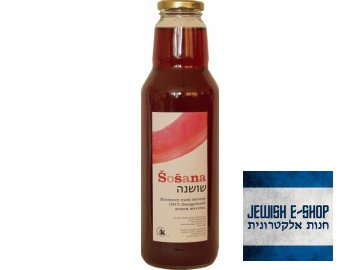
Excellent non-alcoholic red grape juice, 100% kosher Variety: Zweigeltrebe Ingredients: 100% grape juice (Zweigeltrebe) Allergens: - Volume: 0.75 l Shelf life: see...

🥒✨ Transport yourself to a Middle Eastern market! These authentic Israeli pickled cucumbers will instantly captivate you with their bold, tangy-sour flavour, typical of...

Jerusalem Matzos since 1902 - matzo meal for Passover 100% KOSHER for Passover - 454 gramsMinimum expiration date: 2.2.2026

🥒✨ Crunchy, juicy and full of authentic Middle Eastern flavor! These large pickled cucumbers in brine from Israel are an absolute dream for lovers of sour pickles –...


🍆✨ Let yourself be enchanted by the exotic taste of the Middle East! These pickled eggplants from Israel are a true delicacy – gently tangy, fragrant with spices and with a...
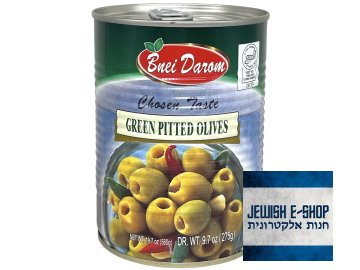
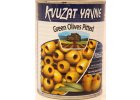
🫒✨ Close your eyes and let yourself be carried away to the sunny Mediterranean! These juicy pitted green olives from Israel are little treasures full of intense, mildly spicy...
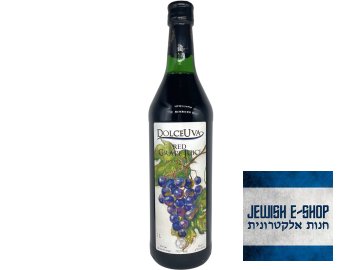
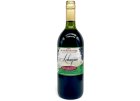
🍇✨ Close your eyes and imagine sunny Italian vineyards full of ripe red grapes – that is exactly the taste of this exceptional must! Sweet, full-bodied and intense, the DolceUva...
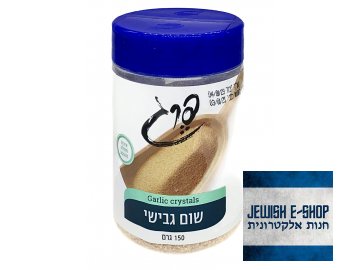
A universal seasoning in almost every kitchen in the world! 150 grams Minimum shelf life until: January 3, 2025 Typical taste, distinct aroma. Granulated garlic is perfect for...

A perfect helper for every kitchen with a typical taste and aroma. 120 grams Minimum shelf life until: February 6, 2025 Cumin is one of the oldest spices here and in the...
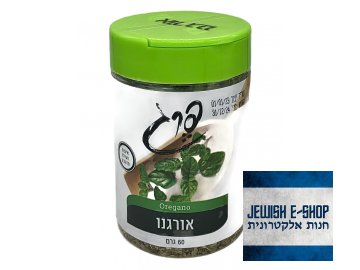
A popular dried herb typical of Mediterranean cuisine. 60 grams Minimum shelf life until: December 31, 2024 The perfect spice inextricably linked to Italian cuisine - pizza,...

Exotic spices ground from the dried rhizomes of the tropical turmeric tree. 150 grams Minimum shelf life until: February 6, 2025 Turmeric, typical with its distinctive yellow...

100% sesame paste in a convenient 500g package. Made in Israel.Tahini 100% sesame pasteIngredients. Allergens: sesame. Weight: 500g.Minimum durability until: 24 April...
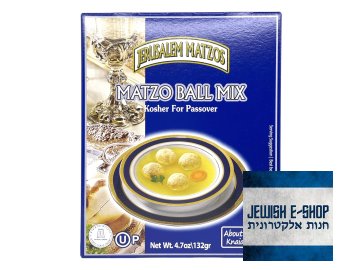
Matzo ball mix in home style, kosher for Pesach/Passover 132 g Homestyle Matzah Ball Mix - for approx. 12 matzo balls Best before: 02/02/2024 Ingredients: Passover Matzo meal...

Jerusalem Matzos since 1902 - matzo meal for Passover 100% KOSHER for Passover - 454 gramsMinimum expiration date: 2.2.2027
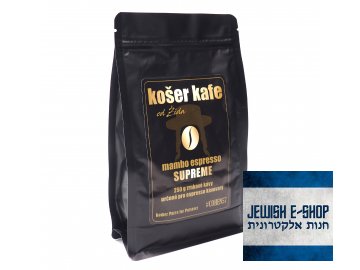
Our own coffee jewish e-shop from Italian coffee roaster. 100% Arabica, kosher certificate. Coffee from a Jew #Cohen57.

100% sesame paste in a convenient 500g pack. Made in Israel.10 out of 18 Israeli-American Jews or Jews say this is the most popular tahini in the world! And the rest? That's...

Creamed Blossom Honey Family Beekeeping Farm: Jiří and Alena Brejchová Country of origin: Czech Republic Net weight: 950 g Best before: 31/12/2026
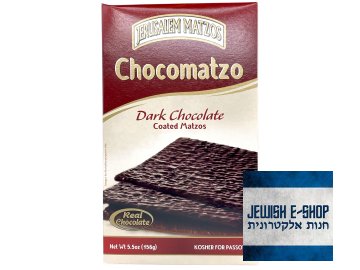
Jerusalem Matzos Chocomatzo – Matzos in Dark Chocolate | 156 g | Kosher for Passover Chocomatzo from Jerusalem Matzos are traditional Passover matzos coated with a layer of...
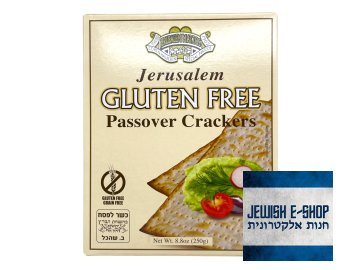
Authentic matzos from Jerusalem, baked in the traditional way since 1907 by the Cohen-Halperin company. They are completely gluten-free and grain-free, making them suitable for...
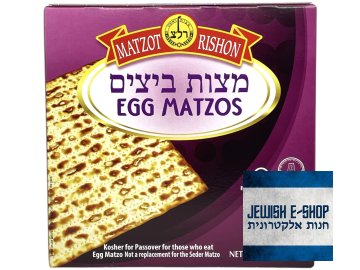
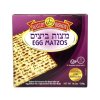
Jerusalem Matzos – Egg matzos for Passover are crispy unleavened flatbreads with a delicate, slightly sweet taste, made specially for the Passover holiday. Thanks to a...

🍬✨ Treat yourself to a piece of the Middle East in its sweetest form! This traditional vanilla halva from Israel is a true treasure for lovers of oriental sweets – delicate,...

🍫🍬✨ When the traditional Middle East meets irresistible chocolate, something exceptional is created! This delicious halva with vanilla and chocolate flavor from Israel is the...
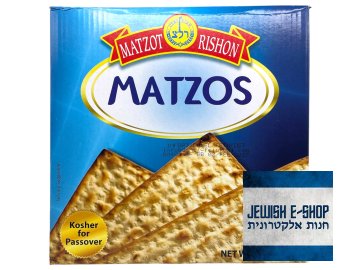
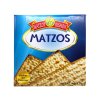
Original Israeli matzos of the Matzot Rishon brand, manufactured and packaged directly in Israel by Em Hachita Ltd. Prepared exclusively from wheat flour and water, without any...
What does kosher mean?
In gastronomy, the word kosher (כשר, kasher), also transcribed as kosher in English, refers to foods and beverages that meet a set of Jewish regulations and dietary habits known as kashrut (כשרות). In a broader sense, kosher in Judaism refers to anything that is ritually fit, in accordance with regulations, and what is correct, proper, or acceptable. This word has a similar meaning in many national languages, including Czech and English. In Czech, there is also an obsolete word "košer" which is a name for a Jewish butcher, commonly referred to as a shochet. It's important to remember that Jewish cuisine dishes are not kosher unless they are prepared in accordance with kashrut.
What is and isn't kosher is determined by the Torah, specifically in the sections of Va-Yikra (Leviticus) and Devarim (Deuteronomy). Kashrut has no justification and falls into the category known as chukim, i.e., rules whose reason is the necessity to "obey G-d and imitate His holiness." In connection with kashrut, two supporting arguments are often mentioned, which, however, are not the reason for its existence. These include hygienic/dietary reasons and educational reasons. While the first mentions the need to avoid easily perishable foods as a reason, the second serves as a constant reminder of Judaism and Jewish education of children.
The Torah lists permitted and forbidden animals (for some groups only forbidden ones). Among mammals, it is possible to eat animals that are even-toed ungulates (have completely split hooves) and ruminants. This group includes cattle, sheep, goats, big game (e.g., deer, bison). Forbidden and unclean mammals include pigs, rabbits, hares, horses, etc. In the case of birds, the Torah explicitly lists forbidden species, which mainly fall into the group of predators and scavengers. Permitted species include domestic poultry (chickens, ducks, geese, turkeys, quails, pigeons, or pheasants), and in the past, peacock was also eaten as kosher. Milk and eggs can only be consumed from animals that are themselves kosher. It is possible to eat all fish that have fins and are scaly, with the scales having to be ctenoid or cycloid. Predatory fish, eels, sharks, rays, sturgeons (including caviar), and seafood are forbidden. Among other animals, it is forbidden to eat reptiles and amphibians, and except for a selected number of locusts, insects as well (locusts are a specialty especially of Yemeni Jews). Explicitly forbidden are dead animals and carcasses (nevela) and sick and torn animals (trefa).
One of the principles of kashrut is the strict prohibition of mixing meat (basar) and dairy (chalav) foods, which is based on the verse "you shall not boil a kid in its mother's milk." This means that it is forbidden both to cook such foods together and to consume them. In Jewish households observing kashrut, there is separate tableware and kitchen utensils for meat and dairy foods. It is also forbidden to benefit from the sale of such mixed foods. In the case of separate consumption of dairy and then meat dishes or vice versa, there is a time limit that must elapse between individual courses. These time limits differ among individual Jewish communities. This period is shorter when you eat a dairy dish first and then a meat dish (does not apply to hard cheeses). It is usually half an hour, or you can eat some parve (Parve is a dish that is neither meat nor dairy. This includes fruits, vegetables, grains, eggs, fish, pasta, etc.) and rinse your mouth. In the opposite order, i.e., first a meat dish and then a dairy dish, the time is much longer and depending on individual communities ranges from one to six hours.
The consumption of blood is strictly forbidden. This prohibition is based on the verse from the Torah "whoever eats any blood will be cut off from his people." The Torah also provides a justification, namely that "the life of the body is in the blood." Blood is removed from the animal's body by a prescribed special slaughter (shechita) and then its remnants are removed by a technique known as melicha. This prohibition does not apply to fish.
The Rabbinate of the Jewish Community in Prague annually publishes a guide to kosher foods, which lists suitable shops, products, foods, beverages, but also forbidden non-kosher additives.
Meat from kosher animals does not automatically become kosher. It must undergo a special type of slaughter (shechita), which is performed by a specially trained Jewish butcher (shochet). The essence of shechita is that the animal does not suffer during slaughter, and that all blood, whose consumption is strictly forbidden, is removed from the body. During slaughter, the shochet cuts the animal's throat with a special sharp knife (chalaf), which must not contain any unevenness or tooth. This cut simultaneously severs the neck veins, arteries, larynx, and esophagus, resulting in a sharp drop in blood pressure in the brain and immediate loss of consciousness. Thanks to this slaughter, the animal feels no pain. There are five halachic regulations set out in the Shulchan Aruch (Yoreh De'ah 23) that the shochet must follow.
Residual blood is removed from the meat by a special set of procedures (melicha). The meat is first immersed in cold water for about half an hour, which results in the opening of the pores. It is then placed on an inclined board and sprinkled with coarse salt, which removes blood from the meat due to the principle of osmosis. After completing melicha, the meat needs to be washed. However, this technique cannot be used for all types of meat. This mainly concerns organs such as liver, heart, or lungs. Liver can be prepared by salting and roasting over fire (kashering), which is also an alternative method for preparing other meats. Tendons and the venous system must also be removed from the meat. After slaughter, the animal is thoroughly inspected and if even the slightest defect is found, disease detected, etc., the animal automatically ceases to be kosher.
For a restaurant (but also a home kitchen) to be kosher, it must have separate dishes and kitchen utensils for meat and dairy products. It is also not possible to wash these two types of dishes together (e.g., in a dishwasher or sink). However, it is not forbidden to store both types of food in one refrigerator, provided they have their permanent place. A special procedure for contaminating dishes with non-kosher food, chametz, or contact between meat and dairy products is kashering. This is done either by boiling or burning over a flame (libun).
Kosher products have a kosher certification on their packaging. This is a special symbol, known as a hechsher (הכשר), which informs the consumer that the product was manufactured and processed under rabbinical supervision, and thus meets the requirements of kashrut. In the Czech Republic, the only authorized issuer of hechsher is the Rabbinate of the Jewish Community in Prague. In the United States, the largest authorities issuing hechshers include Orthodox Union, OK Kosher Certification, and Kof-K. The hechsher may be supplemented with a letter indicating the nature of the product (D for dairy products, M for meat, P for Passover, and Pareve for parve products). The certification itself takes place when a company seeking certification is visited by a mashgiach (משגיח), who checks the production process and procedures, the facility itself, recipes, and suitable and unsuitable additives. He then decides on granting kosher certification.