
JUDAICA - Jewish souvenirs and Jewish subjects
-
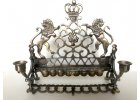
 Jewish candelabrum
-
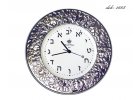
Hebrew clock
-
Seder plates
-
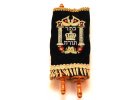
The Torah (תורה)
-
Dreidl - Sevivon - Drejdl
-
Covers for Challah
-
Talit - Tallit
-
Shofar
-
Mezuzah (מזוזה)
-
Kiddush cups
-
Havdalah (candlesticks, spice boxes, cups or sets)
-
YAD - Torah pointer
-
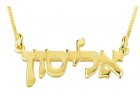
Jewish pendant with name - IN HEBREW
-
JUDAIKA - jewellery
-
Jewish spice boxes
-
Jewish game "pairs"
-
Israeli flag
-
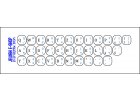
Hebrew keyboard (מקלדת עברית, mikledet ivrit)
-
Tfilin - Tefilin
-
Miniatures JUDAICA
-
Natlah - Netilah
-
Cufflinks - JUDAICA
-
Music >>> JUDAICA
-
Prayers and blessings
-
Jewish cup
-
Keychains
-
Jewish badges
-
Signs – Judaica
-
Jewish Stickers and Postcards
-
Candles













Product sorting
List of products

שברכת בת המצווה שלך תישאר איתך לכל החיים!(Shebirkat Bat Mitzvah shelach tisha'er itach lechol ha'chayim!) Explanation שברכת (Shebirkat) - "May the blessing" (literally "that...

שברכת בת המצווה שלך תישאר איתך לכל החיים!(Shebirkat Bat Mitzvah shelach tisha'er itach lechol ha'chayim!) Explanation שברכת (Shebirkat) - "May the blessing" (literally "that...

Red bracelet with adjustable length Eye pendant in different colors: turquoise, dark blue, black, light green, pink, light pink, orange, red

Minimalistic plastic mezuzah without scroll, transparent with golden letter Shin, "Machon Stam" logo on the side, 7 cm.


Reproduction of a nice author's calendar of Christian-Jewish holidays and memorial days.

Medium-sized Shabbos candlesticks of classic design. Height: 16 cm Base width: 7cm

An elegant costume jewelry necklace with a pendant in the shape of the Star of David (Magen David) with a silver menorah in the center. The pendant is made in a combination of...

Shabbos candlesticks with Star of David, metal and glass Height 15.5cm Price is for 1 pair

A delicate challah cover with a Hebrew inscription שבת ויום טוב - Shabbat Ve-Yom Tov in the center of a circular medallion. Around it wind leafy sprigs with red and yellow...

The Torah pointer, or yad, is a practical tool used during the reading of Scripture by Jewish communities around the world. This particular yad will please with its elegant...

The Torah pointer, or yad, is a practical tool used during the reading of Scripture by Jewish communities around the world. This particular yad will please with its elegant...

size: diameter 15 x 95 mm, chain length 40 cm + 5 cm adjuster surface finish: antique brass packaging: box with foam lining

size: diameter 15 x 95 mm, chain length 40 cm + 5 cm adjuster surface finish: antique brass packaging: box with foam lining

size: diameter 15 x 95 mm, chain length 40 cm + 5 cm adjuster surface finish: antique silver packaging: box with foam lining

A beautiful bread cover with golden wheat ears, hamsa with fish, birds and part of the Hebrew blessing over bread "...ha-moci lechem min ha-arec" ("...who brings forth bread...

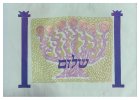
A beautiful challah cover featuring a stylized seven-branched menorah, two temple pillars (Jachin and Boaz) and a Hebrew inscription "SHALOM". Size: approx. 43 x 32 cm....

A beautiful challah cover featuring a stylized seven-branched menorah, two temple pillars (Jachin and Boaz) and a Hebrew inscription "SHALOM". Size: approx. 43 x 32 cm....

A beautiful challah cover featuring a stylized seven-branched menorah, two temple pillars (Jachin and Boaz) and a Hebrew inscription "SHALOM". Size: approx. 43 x 32 cm....

A beautiful bread cover with golden wheat ears, hamsa with fish, birds and part of the Hebrew blessing over bread "...ha-moci lechem min ha-arec" ("...who brings forth bread...

size: diameter 22 x 115 mm, chain length 40 cm + 5 cm adjuster surface finish: antique brass packaging: box with foam lining

size: diameter 22 x 115 mm, chain length 40 cm + 5 cm adjuster surface finish: antique silver packaging: box with foam lining

size: diameter 22 x 115 mm, chain length 40 cm + 5 cm adjuster surface finish: gold packaging: box with foam lining

size: diameter 22 x 115 mm, chain length 40 cm + 5 cm adjuster surface finish: silver packaging: box with foam lining

Large luxury massive natla directly from Israel, with Hebrew inscription "netilat yadayim" Height 14 cm, material: polymer

Eye-catching pit earrings with star of david, silver. Screwing closure.Diameter: 7mm, silver purity: 925/1000

Shabbat candlesticks, foldable, travel, with Jerusalem motif and Star of David. General metal, dimensions: 10 x 2 cm when unfolded.


Extremely luxurious beautiful porcelain Natla with gilded Star of David motif and floral decor. The Natla is made using traditional technology in an old Czech porcelain factory...

A metal hanukkiah in matte black, whose shape rises like the strings of King David's harp. The curved arm with nine candle holders recalls the stretched body of the instrument,...

A metal hanukkiah in matte grey, whose shape rises like the strings of King David's harp. The curved arm with nine candle holders recalls the stretched body of the instrument,...

A metal hanukkiah in modern design with nine candle holders. An elegant glossy body formed by an arched construction on a stable oval base, with individual arms ending in...

Antique filigree earrings made around the year 1900. The earrings originate from the Middle East and represent meticulous craftsmanship in the style of Jewish Yemeni artisanal...

Silver Havdalah spice container, made in Israel in the mid-20th century. The spice container bears the typical features of the Israeli style of the Bezalel school, combining...

Jewish souvenirs include a broad range of subjects that are related to Jewish religion (Judaism), arts and culture. Apart from a Jewish clothing, there are for example a Jewish religious items, including the following:
Mezuzah (מזוזה), literally 'doorpost', is a small case, placed on a doorframe, which contains a parchment scroll with verses from the Torah (part of Shema Yisrael blessing). Mezuzah's case is often decorated with ornaments and can be made of various materials. Mezuzah is typical of Jewish homes and stores and is one of the 613 mitzvot. There is a custom among religious Jews to touch Mezuzah and kiss the fingers that were used, when passing around it. Parchment scroll should be checked for defects every seven years.
Shofar (שופר) is an unadorned animal horn used as a Jewish religious instrument on a ceremonial occasions. It is made from the horn of a ram (it is necessary to use a ram's horn during the festival of Rosh Hashana) and other kosher animals like goats, antelopes or gazelles (except for a cow's or calf's ram). According to the Torah a sound of Shofar was heard for the first time during G-d's revelation at Mount Sinai. Shofar is traditionally used during the festival of Rosh Hashanah, when is blown after each morning service. The sound of Shofar also announces the end of fasting on Yom Kippur and the inauguration of President of Israel. There is a prescribed way how to blow Shofar over particular Jewish festivals, which must be followed.
Israeli souvenirs are a specific type of Jewish souvenirs, that are related to the modern State of Israel. One of them is e.g. Israeli flag (דגל ישראל, Degel Yisrael), the national flag of Israel. It consists of a white background with two horizontal blue stripes, located at the upper and lower parts of the flag, and a blue Star of David. Blue and white are the colours of Judaism and the flag itself symbolizes Tallit, the Jewish prayer shawl. Star of David, or Shield of David (Magen David) is a six-pointed star (hexagram) and a symbol of Judaism. The flag itself is based on the Zionist flag, adopted by the First Zionist Congress in Basel in 1897.
Hannukah (חנוכה), also known as the Festival of Lights, is an eight-day festival, which commemorates the successful Maccabean Revolt against the Seleucid Empire, which religiously persecuted Jews, and the subsequent miracle that occured during the consecration of the Temple in Jerusalem. This Temple was desacrated by Syrians and the re-consecration involved burning of the Temple's menorah. For this purpose was needed pure olive oil, but Maccabeans found only enough oil to burn for one day, but miraculously it burned for eight days, until they managed fo prepare the new one. This miracle is celebrated by lighting candles on the unique candelabrum (Hanukiah) and eating food fried in oil, such as potato pancakes (latkes) and jelly doughnuts (sufganiyot). This festival falls on the months of Kislev and Tevet and may occure from late November to late December in the Gregorian calendar.
Passover (פסח), also known as the Festival of Unleavened Bread, is one of the Three Pilgrim Festivals, which commemorates the Exodus of Jews from slavery in ancient Egypt. It is one of the oldest and most important Jewish festivals. It lasts eight days (seven in Israel) and is characterized by unique eating habits and customs. These include a prohibition of fermented food and beverages (bread, beer, whiskey) and consumption of unleavened bread (matzos). There are two special evenings (one in Israel) held during the first two days of Passover. They are called a seders and include eating of symbolic food and telling the story of Passover. This festival falls on the month of Nissan and may occur from March to April in the Gregorian calendar.
Purim (פורים) is one the most cheerful Jewish festivals. It commemorates events recorder in the Book of Esther, according to which Esther, wife of King Ahasuerus, foiled the plans of the royal vizier Haman to annihilate Persian Jews. Purim's traditions include public recitation of the Book of Esther, giving gifts and charity, drinking wine and carnivals. It falls on the month of Adar and may occur from February to March in the Gregorian calendar.
Rosh Hashanah (ראש השנה) is a festival commemorating the beginning of the Jewish New Year. It is one of the High Holidays and according to Jewish tradition it falls on the day when the world was created. It begins the Ten Days of Repentance, followed by Yom Kippur. A religious Jews should spend this day in prayers. Rosh Hashanah's traditions include blowing a shofar, eating symbolic food (dipping bread and sliced apples into honey, eating carrots and fish heads) and performing tashlikh. It falls on the month of Tishri and may occur from September to October in the Gregorian calendar.
Yom Kippur (יום כיפור), also known as the Day of Atonement, is the holiest and most important Jewish festival. It is one of the High Holidays and the culmination of the Ten Days of Repentance. During these days, every individual should amend its sins. This day is characterized by fasting and intensive praying. According to Jewish tradition, Yom Kippur is the day, when G-d forgave the people of Israel worshipping the Golden Calf and the day of Abraham's circumcision. It falls on 10th day of Tishri and may occur from September to October in the Gregorian calendar.
Sukkot (סוכות), also known as the Feast of Tabernacles, is one the Three Pilgrim Festivals. It lasts eight days (seven days in Israel) and commemorates the period when Jews were wandering in the desert after they had left Egyptian slavery. Sukkot's traditions include building of sukkah (pl. sukkot), a tabernacle or booth, where Jews eat and sometimes sleep and taking the Four Species (lulav, hadass, etrog, aravah). It falls on the month of Tishri and may occur from September to October in the Gregorian calendar.
Shavuot (שבועות), also known as the Festival of Weeks or Festival of Reaping, is a two-day (one-day in Israel) festival and one of the Three Pilgrim Festivals. It commemorates the day when G-d gave the Torah to Moses at Mount Sinai. It is also the culmination of the Counting of the Omer. Shavuot's customs include eating of dairy food, all-night Torah study and decoration of synagogues with greenery. It falls on the month of Sivan and may occur from May to June in the Gregorian Calendar.
Jewelry is one of many fields which have been affected by Judaism and Jewish mysticism and symbolism. A Jewish silver, gold and costume jewelry reflects both traditional and lesser-known Jewish symbols.
The most widely known example of Jewish jewelry is the Star of David (מגן דוד, Magen David, literally 'Shield of David'), a six-pointed star (hexagram) and the best-known symbol of Judaism. Although its earliest use dates back to the 7th century BCE, its use as a symbol of Judaism is a relatively modern. It is mentioned neither by Tanakh nor Talmud and its name should refer to the shape of King David's shield. In the Middle Ages it was known as the 'Seal of Solomon' and according to the Kabbalah the two equilateral triangles represent the dichotomies inherent in man (good vs. evil or spirituality vs. physicality). Since the 19th century it is generally accepted symbol of Judaism. It became symbol of Zionist movement in 1897 and since 1948 it has been part of Israeli flag. Yellow-coloured Star of David was used by Nazis to identify Jews during the Holocaust.
A palm-shaped amulet, known as hamsa (חמסה, khamsa, literally 'five'), is quite popular among Sephardic Jewish communities in Northern Africa and in the Middle East. It is a common to both Judaism and Islam, although in each religion it has a different symbolism. It looks like a symmetrical palm and it does not reflect human anatomy. Hamsa is a protective amulet against evil eye and it often contains an eye symbol, fish or a Hebrew inscription. According to Jewish symbology five fingers represent the five books of the Torah. It is sometimes referred as the 'hand of Miriam', who was the sister of biblical Aaron and Moses. Hamsa is often worn as part of necklaces.
There are also popular Kabbalistic symbols. Kabbalah (קבלה) is a Jewish mysticism and esoteric teaching. Its beginnings can be found in some parts of the Tanakh and in the Sefer Yetzirah. Other teaching's sources include Zohar and Sefer Ha-Bahir. The basis of the Kabbalah, which is a secret and complex set of teachings, is a continuous interaction between man and G-d, while G-d is viewed as 'infinite source of strength and wisdom.' Nowadays, Kabbalah is still practised in some circles. There is a specific stream of Kabbalah known as New Age Kabbalah.
In addition to these symbols, there are many other Jewish symbols, which can be purchased as a jewel.